by Teresa Chan
What is it actually like to take part in LDaCA’s Graduate Digital Research Fellowship (GDRF)? We put the question to Teresa Chan, LDaCA’s Senior Research Project Officer in Research Support and Training and a 2026 GDRF participant. Running for the fourth consecutive year and led by Simon Musgrave and Sam Hames, the program is designed to open up the world of digital scholarship to research students.
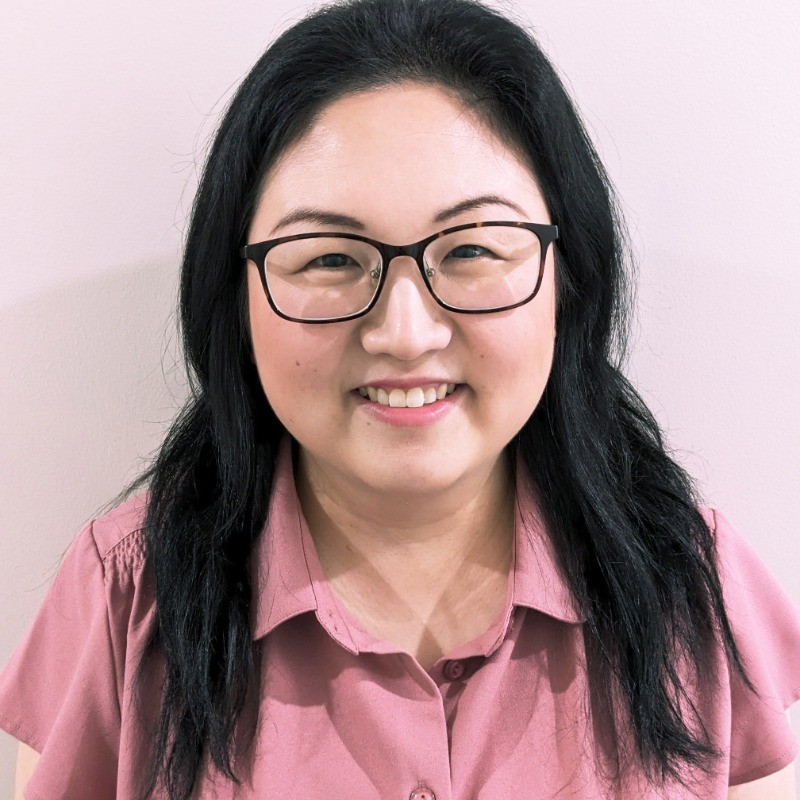
Image Source: Teresa Chan
What made you decide to apply?
I was already familiar with the GDRF program through Simon (full disclosure: he is my manager), but the thought of applying never crossed my mind until I started my own research project and began using the R programming language to process and analyse data. Although I had become much more proficient over the subsequent months, I still felt like a novice, so I decided to apply to ‘level up’ my skills with some professional support. Also, as there is a strong possibility I’ll be publishing my research, I felt the GDRF program could help me uphold the level of academic rigour required to do so.
What is the project you are working on and what were your expectations for how GDRF might help with it going in?
The project I’m working on looks at general extenders in the data collections in the LDaCA Data Portal, such as the Corpus of Australian English as a Second Language (AusESL). General extenders are non-specific expressions that extend grammatically complete utterances, such as ‘and stuff’ and ‘or something’. An example would be, “I went to buy bread and cheese and stuff like that”.
I’m hoping to come up with digital methods to help other researchers looking at general extenders, whether that be tools, notebooks, workflows or some such (look, an extender!). Currently, researchers tend to use concordancing software like AntConc to search for expressions and then manually review the results. Not only is this time-intensive, it doesn’t capture the full range of possible extenders — what about “and stupid/silly/fun/<insert another adjective here> things like that”? There is definitely something computational that can be done to reduce the amount of irrelevant results, while increasing the scope of the search — as Simon would say, increasing precision and recall!
Before starting the GDRF program, I had already created some R notebooks and scripts that achieved this. However, errors would inevitably pop up every time I applied them to a new dataset. I hoped that in joining the program, someone with experience could have a look at what I’d put together so far and help me polish up my code. Not only that, they could suggest better, more efficient ways of accomplishing what I was trying to do, and in the process, I could learn more about the fundamentals of programming.
What did some of the early group sessions involve?
In the very first session, we were given a short time to brainstorm, then had to give a two minute pitch about our research. At this stage, it tended to be more about giving a high-level overview. We then filled out a research planning template that drilled into specifics, such as what data we wanted to work with and what tools we would need. Participants were then supposed to pitch their work again. Unfortunately, I had to drop out of the session at this point, but it would have been interesting to hear how people’s pitches changed once they started reflecting on their data in more detail.
In a subsequent session, we focused on digital scholarship. We completed an exercise where we attempted to cite several different sources using our preferred method, then came back as a group to discuss things like whether we used citation software and what we would do if a preferred citation was provided with a source. One particular source was unanimously considered the most tricky — a specific word from a website, which had recordings of First Nations people saying individual words from their language. I had opted to cite it like an audio recording, but the consensus was generally that it could be considered akin to a dictionary entry. We also touched on the provenance of data, using a social media post as an example, and persistent identifiers.
Which mentor have you been partnered with and what has the experience with them been like so far?
I’ve been partnered with Sam, one of the two coordinators, and the experience has been incredibly valuable so far. Even though we only chat for an hour at a time, I feel like we cover so much ground and I leave with more ideas and avenues to pursue. I’ve gotten a clearer picture of my work overall from hearing someone else explain it in their own words. Sam has also really made me consider the end user of what I’m trying to produce, helping me to be clear on the value I can provide and the specifics of what that would look like. When you’re deep into the data, it really helps to have someone force you to step back and look at the bigger picture. He has somehow simultaneously helped me expand the possibilities of what I can do, while also narrowing down my focus.
What have you been learning so far?
I’m learning that there’s no point rushing in and trying to build all sorts of cool, digital tools if you haven’t nailed down exactly how and why someone would use these tools. To paraphrase Sam, you can do anything computationally, there’s no limit. But what I’m finding out is that a tool needs to help a researcher achieve something to actually be of value and lead to them incorporating it into their workflow. I’m also learning that when I do have notebooks or scripts I’m sharing with others, I should do whatever I can to make it clearer for them to follow and understand. I am familiar with general extenders, so I understand all the different variants I’m trying to identify, but that doesn’t apply to every person who might be viewing my code.
What has the experience meant for your work and its direction? Is it evolving along the way?
Although the program is specifically process-oriented, rather than output-oriented, it’s really helping me figure out what outputs I ultimately want, based on what value I can actually provide to researchers and other users. I’m pivoting away from the idea of providing notebooks and scripts, which require more digital confidence, to tools with user interfaces. Not only that, I’ve been refining the scope of these tools and exactly what tasks they will achieve. Along the way, Sam has been able to show me examples of what’s possible and what’s out there to consider incorporating, for example, visualisations of extenders, which I had never thought about before.
What do you like about collaborating with other participants and your mentor?
As a non graduate research student, I’ve loved getting an insight into their experiences and what completing a PhD thesis can look like. It’s also incredibly fascinating to see the connections they are making, based on tackling similar problems. For instance, a few participants are working with transcripts, and they suggested transcription software and methods to each other. It shows that even though we are all from different fields of research, we’re on the same journey and encountering the same issues. Another added benefit is hearing first hand about how digital methods are new to some students. Being somewhat familiar with programming and working with incredibly tech-savvy colleagues, I sometimes forget how much of a learning curve it can be to novices. This will definitely inform my work in the Research Support and Training area of LDaCA.