by Bridey Lea
8 October 2025
On Wednesday 8 October 2025, The Pacific and Regional Archive for Digital Sources in Endangered Cultures (PARADISEC) hosted a panel discussion offering First Nations perspectives on archival practices. The panel was curated by Dr Jodie Kell and Steven Gagau as part of their exhibition Opening the Archive: Access, Engagement and Innovation, on display at the Sydney Conservatorium of Music Library from August to November 2025. This event brought together four speakers — Steven Gagau, Dr Lauren Booker, Johnny Obed and Evelyn Quispe — and was chaired by Dr Amanda Harris (Director, PARADISEC Sydney Unit).
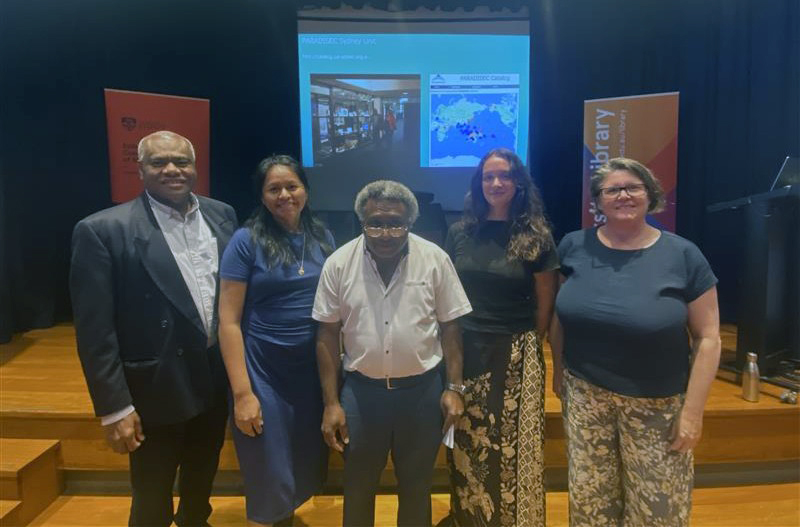
Image Source: PARADISEC
Steven Gagau is an Indigenous Tolai (Gunantuna) man from Papua New Guinea who is a cultural consultant and archivist at PARADISEC. He focuses on archival and curatorial metadata enrichments for Melanesian Pacific collections through connections and collaborations with community outreach projects, such as co-producing the Toksave: Culture Talks podcast, and was cultural researcher on the True Echoes project, a collaboration with the British Library reconnecting Indigenous communities with historic audio records from across Oceania.
Dr Lauren Booker (Garigal) is a Postdoctoral Research Fellow in the Indigenous Archives and Data Stewardship Hub at Jumbunna Institute for Indigenous Education & Research, University of Technology Sydney, and a member of the Indigenous Archives Collective. Lauren has worked across the Australian Galleries, Libraries, Archives and Museums sector (GLAM) on projects supporting First Nations communities and organisations to access Indigenous Cultural and Intellectual Property held in collecting institutions.
Johnny Obed is a ni-Vanuatu educator and church leader from Paama Island in Vanuatu, now based in Sydney. He is an active member of the Wantok Association of Sydney, a representative body for Melanesian people in the diaspora. Johnny has featured in two Toksave: Culture Talks podcast episodes, sharing his knowledge of the culture of Paama and Vanuatu, as well as his perspective on the value of connecting with archival collections.
Evelyn Quispe is an Indigenous doctoral candidate at the Sydney Conservatorium of Music. She is from the Quechua people, located in the Andes Mountains of Bolivia. Her research focuses on exploring and revitalising Warlpiri women’s songs, known as Yawulyu, as part of the broader project Rethinking the dynamics of place in Warlpiri performance, an ARC DECRA project led by Dr Georgia Curran.
The panellists explored the relationship between archives and Indigenous communities, shared experiences of engaging with archival collections to reconnect with heritage materials, and revealed stories behind some of the recordings held in PARADISEC which have helped support the transmission of intergenerational knowledge.
Creating a relational archive
The panel underscored how good relationships between archives and Indigenous communities support better archival practice and better outcomes for communities. Steven Gagau explained the concept of a dialogic or relational archive as such:
- “There's no point having an archive that has storage or preservation and safeguarding all these materials if it doesn't get out of there. It needs to connect and bridge back to communities.”
Steven gave an example of this process in action, describing his work with anthropologist Murray Groves’ field recordings from the 1950s and ’60s in the Central Province of Papua New Guinea.
- “Through my community networks and previous collaborative projects, I connected with Deveni Temu, who's based in Canberra, and shared some legacy recordings from the MG1 [Murray Groves] collection. These recordings were for the first time discovered by the community in Canberra, and the stories behind the recordings are now impacting the community.”
Deveni Temu leads the PNG Peroveta Singers of Canberra, who responded through song to these legacy materials in two special episodes of PARADISEC’s Toksave Culture Talks podcast (watch the performances here and here). “We’ve got waves of cultural revitalisation happening,” Steven reflected.
Johnny Obed was able to describe first hand the feeling of connecting with archival materials from his community, after accessing field recordings made by linguist Terry Crowley on Paama (Vanuatu).
- “I was so pleased PARADISEC had these recordings, and hearing for the first time, I was humbled and very appreciative for the work done. Of course, listening to some of the recordings, I heard the voices of family members who have passed. The main thing here is to know where the recordings are, and that I was able to hear them right here in Sydney.”
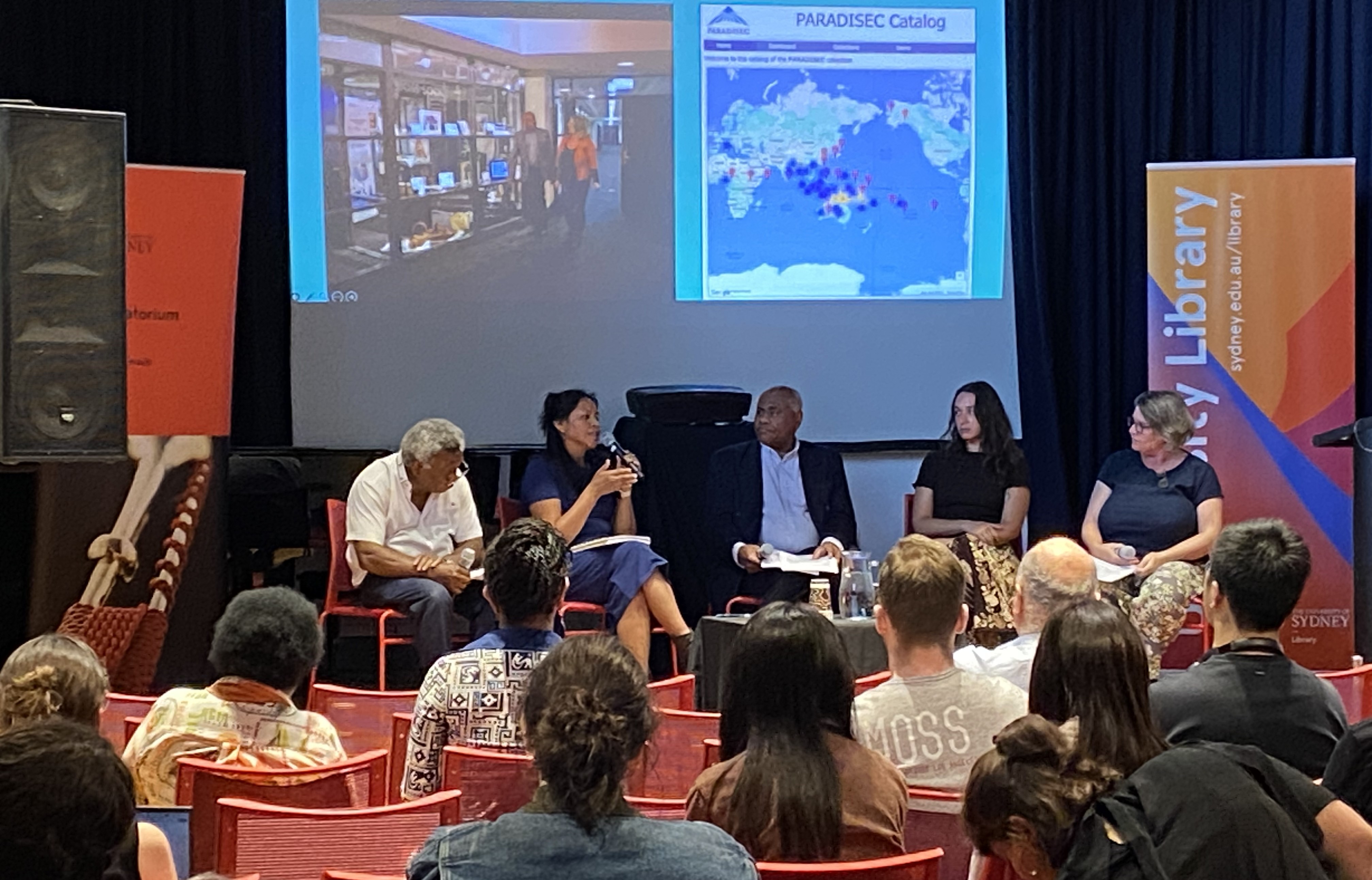
Image Source: PARADISEC
Evelyn Quispe also discussed the emotional impact of archival materials on Warlpiri Elders who she worked with during her doctoral research.
- “They would hear the voices of their own Elders and they would sing along and remember whose voice that is, they would remember and reconnect.”
Facilitating reconnection with archival materials allowed Evelyn to establish trust with the community and encouraged them to document their own knowledge for younger generations, creating an archival feedback loop. She recalled how the relational archive was considered a part of the knowledge holding network by one Elder:
- “She used in her language this word 'madarni', which is preserve, protect, keep, maintain, mind. So she was giving the same verb that [the community] use when they hold knowledge to keep it and pass it on. She was using the same word for the archives.”
Furthering the discussion of relational archives, Dr Lauren Booker, who worked with PARADISEC between 2015 and 2018, recounted her experiences archiving for a Warlpiri women’s song project. Because of PARADISEC’s relational model, Lauren and the rest of the archival team, including Jodie Kell, were able to formalise a women’s only workflow which adhered to gendered access protocols for the materials. Lauren explained:
- “We could assure the women that it was a river that this knowledge was moving on, and there was transparency there around what we were doing and how we were doing it.”
Community access to archives
Despite the rich benefits of engaging with archival materials, Evelyn noted that accessing these materials was a major challenge for Warlpiri people, saying:
- “I found that people depend on someone else to get access to things that are theirs — that would be the biggest challenge.”
A solution to this could lie in engaging young people in the archival process, who have different skills to Elders, including greater digital literacy. She explained:
- “I think the most practical thing to do is to work on training for young people so they can have the tools and the knowledge to access [materials] any time. Internet is available in the community, but knowing how and where to go, that is hard.”
Lauren unpacked how the access and use of archival materials are inseparable from the Stolen Generations, as outlined in the Bringing them home report (1997) and the Healing Foundation’s recent evaluation of its implementation, ‘Are you waiting for us to die?’ The unfinished business of Bringing them home.
- “[The report] showed the importance of records and recordkeeping for Aboriginal and Torres Strait Islander people, particularly for Stolen Generations in the need for reconnections with community, with family, with Country. Records are so vital for this.”
Despite many recommendations made in the Bringing them home report relating to archives and recordkeeping, the Healing Foundation found that almost half of these recommendations have not been implemented, including the recommendation to fund Indigenous traineeships and scholarships for archivists. Lauren further highlighted the importance of skill-sharing across the archival sector, saying:
- “The discipline has, and the sector itself, has a lot of work to do and we have so many resources when it comes to knowledge and practice that we can share.”
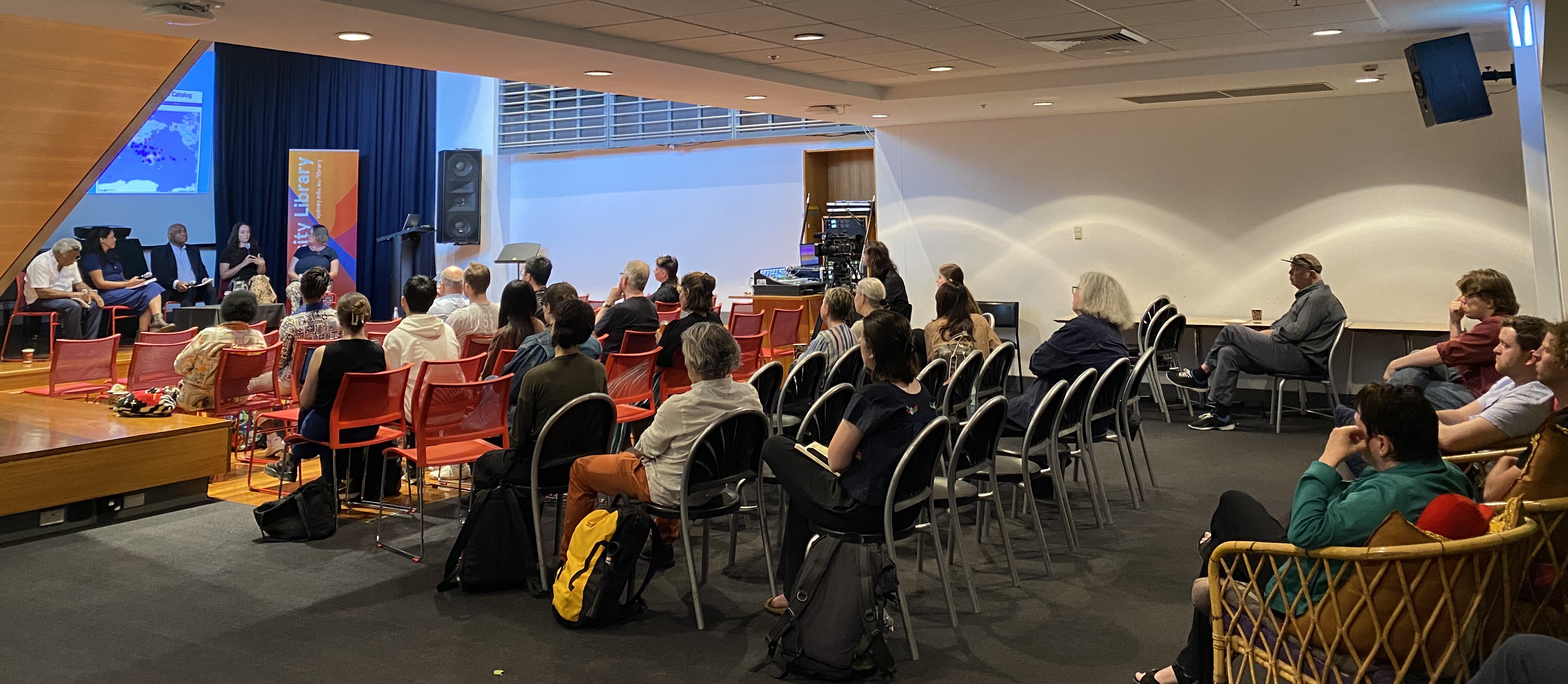
Image Source: PARADISEC
Steven contributed an example of a practical project undertaken with his home community in East New Britain, Papua New Guinea to increase community capacity to engage with and access archives. The project recognised that many people in the region have cassette tapes at home which contain legacy recordings dating back to the 1960s, but which are fast becoming obsolete. Steven expanded on the process and his aims for the project:
- “I set up a project team at home, I trained them up in archival principles and preservation. The idea there was to look forward to the future. So I’m working on the archival concept that let us be responsible in the present, to have records and preserve the past as a resource for the future.”
The project was not only about preserving legacy recordings, but engaging local communities in the archival process so that they are aware and informed about archival collections. Steven explained:
- “This is an example of how we can use the archives to engage, access, and collaborate with communities more and let them be part of the archival community rather than being on the outside, from where the material came in the first place.”
Where do we find ourselves in the near future?
The panel concluded with a look towards the role of archives in the future. Johnny asked us to contemplate where we find ourselves within this future when faced with the realities of climate change.
- “We are storytellers — that's what we are. And if we don't have a story to tell, we are really hopeless. We have nothing,”* he said. *“Let's think about the importance of this from a Pacific cultural view. In Papua New Guinea we have about 800 languages, in Vanuatu a population of 400,000 people, about 112 dialects, and in the Solomons many as well. Just in Melanesia, not counting the Polynesians. This is a lot of work, a lot of stories. Now when we hear about climate change, and cultures are now beginning to lose [themselves], what do we do? And I think that's the challenge I want to leave with you — is where do we find ourselves in the near future?”
This was a powerful reminder that archives help us tell our stories, and that safeguarding cultural heritage is particularly vital when people are separated from their land. Archives have an imperative to care for the materials they hold, as keepers of stories and catalysts for cultural revitalisation. Lauren offered a final reflection on the role of archival workers in our current reality and in the future, highlighting the importance of care in archival practice:
- “You're caring for material, you're caring for knowledge, and you're caring for community and Country by engaging with archives in a way that sees them as important and significant and needing that care and consideration.”
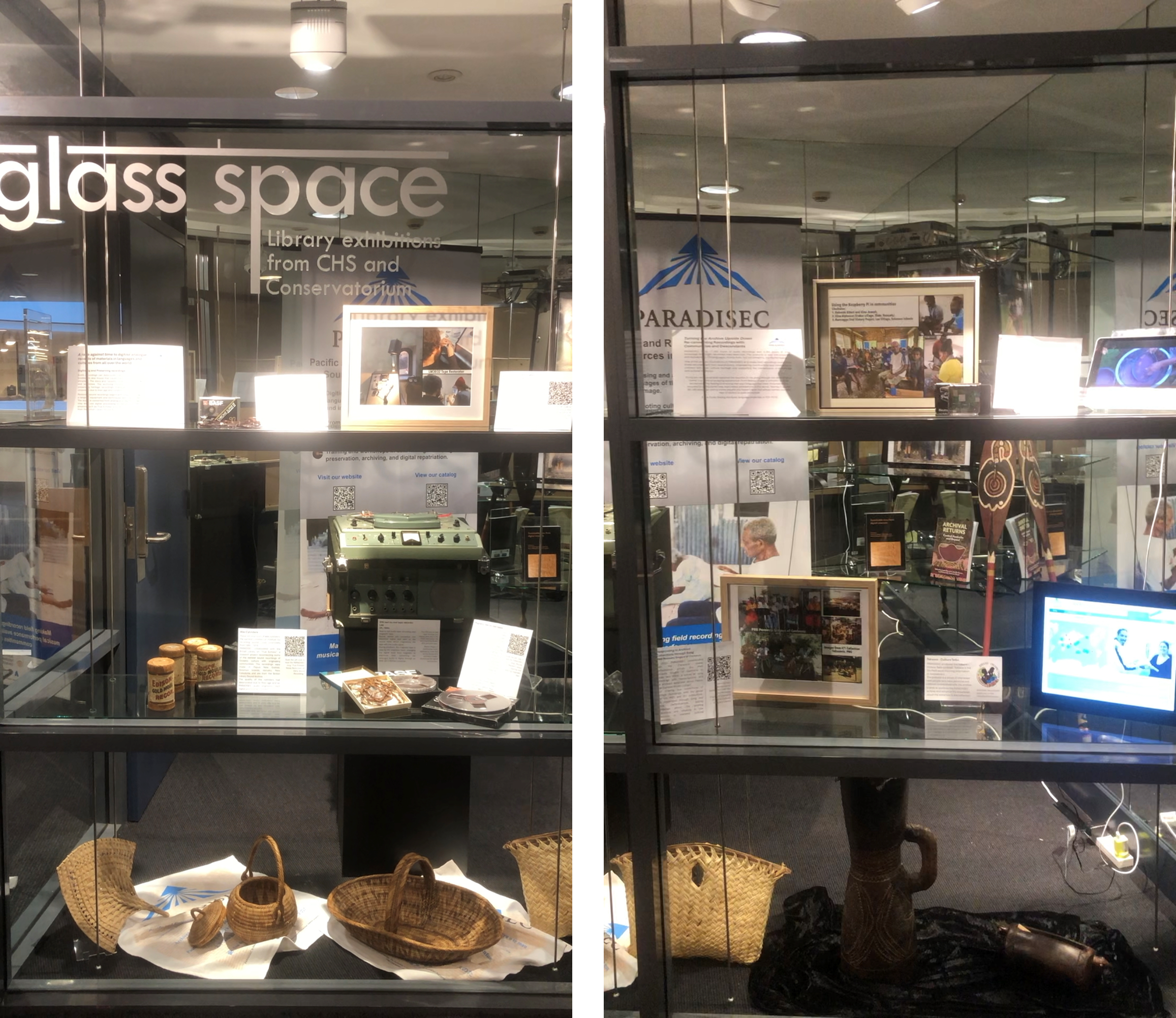
Image Source: PARADISEC