Audio & video
Videos and audio recordings including presentations from our team and bite-size explainers.
RECORDING
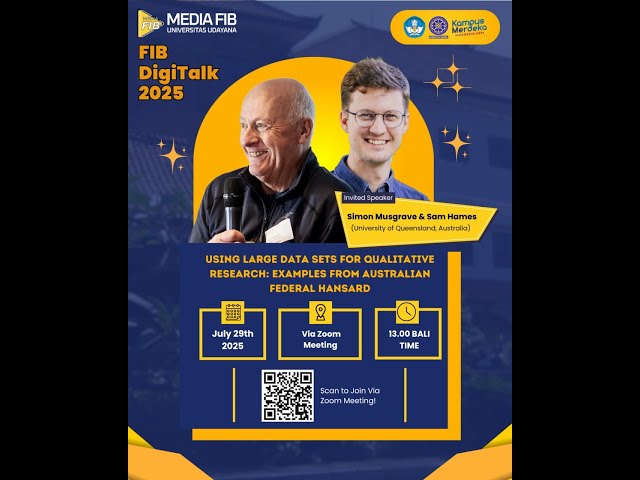
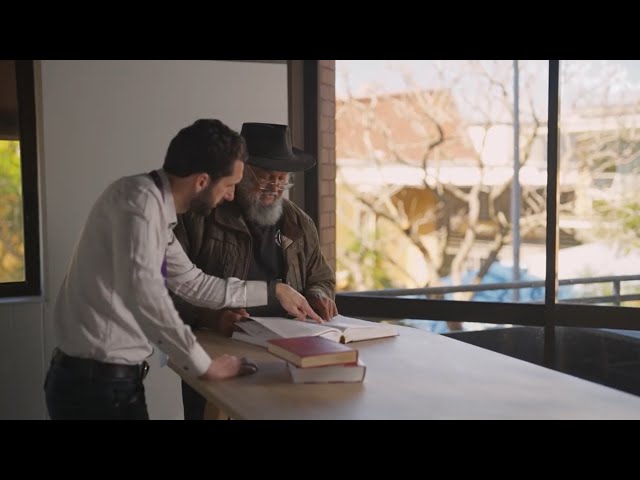
Introduction to The Language Data Commons of Australia
Learn about the Language Data Commons of Australia (LDaCA) and see how it is connecting people, data, and stories. This short video introduces our work to make language collections findable, accessible, and responsibly cared for.
RECORDING
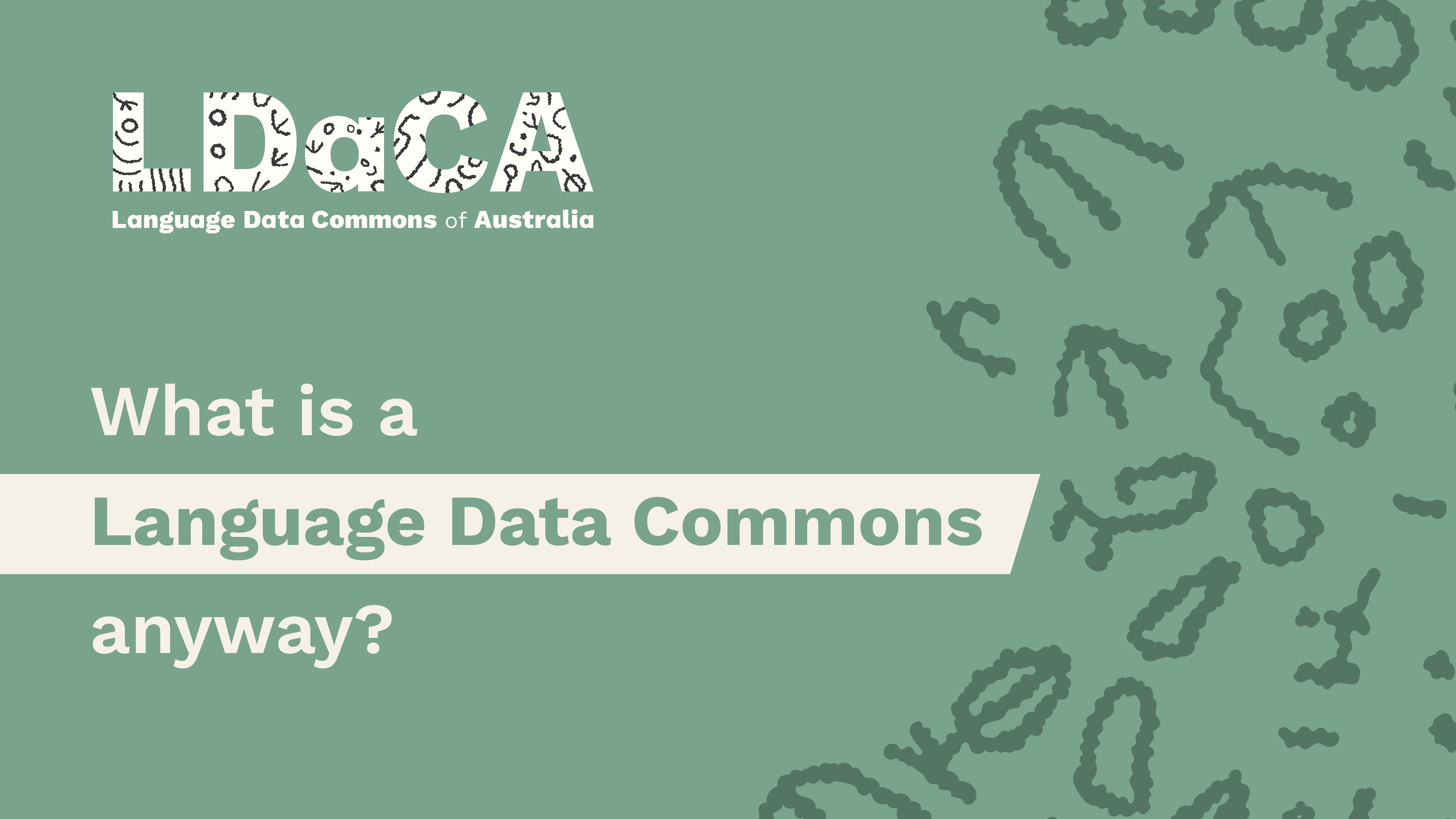
What is a Language Data Commons anyway?
This video series serves up speedy answers to common questions about the Language Data Commons of Australia (LDaCA). What’s language data? Why does it matter? Who uses a language data commons and how does it even work? From giant storage questions to tricky metadata mysteries, each short video helps clear things up.
AUDIO
Robert McLellan talks to Sarah Morice (ABC NewsRadio)
Robert McLellan, Program Manager at LDaCA, talks to Sarah Morice of ABC NewsRadio on 09/08/2024.

RECORDING
What is an RO-Crate?
An explainer about Research Object Crates (RO-Crates). Created by Otis Carmichael.
WEBINAR
The ParlaMint corpora of European parliamentary proceedings
28 August 2025
In this webinar, CLARIN colleagues Tomaž Erjavec and Matyáš Kopp presented the ParlaMint corpora, a collection of 29 European parliamentary datasets covering national and regional proceedings from 2015–2022 and containing over one billion words.
RECORDING
Language Data Commons of Australia - HASS & Indigenous Research Data Commons Symposium 2025
12 November 2025
UTS
This presentation on LDaCA was delivered at the 2025 Symposium of the ARDC HASS and Indigenous Research Data Commons, held at UTS on Gadigal Land, Sydney, 12 November 2025. Learn more about the Language Data Commons of Australia.
RECORDING
Showcase of Language Data Infrastructure - Language Data Commons of Australia
11 November 2025
UTS
This presentation on LDaCA tools was delivered at the 2025 Symposium of the ARDC HASS and Indigenous Research Data Commons, held at UTS on Gadigal Land, Sydney, 11 November 2025. Learn more about the Language Data Commons of Australia.
RECORDING
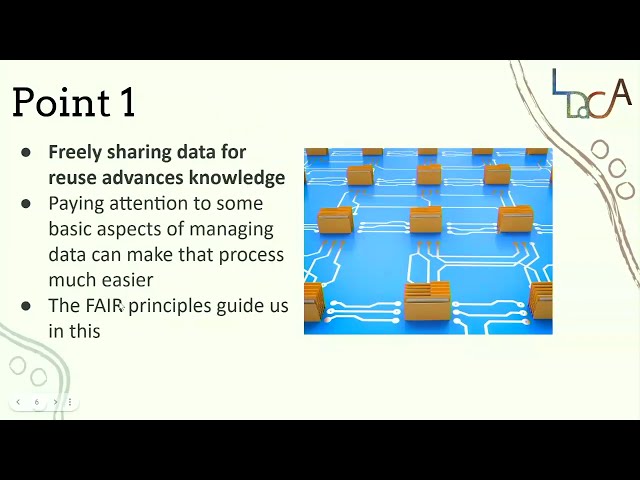
FAIR and CARE Principles 101 (HASS & Indigenous Summer School 2025)
A basic introduction to two sets of principles providing a framework for researchers to manage data. FAIR makes data as open as possible and as closed as necessary, ensuring data are Findable, Accessible, Interoperable and Reusable. CARE principles respectfully consider how to manage Indigenous data, ensuring Collective Benefit, Authority to Control, Responsibility, Ethics. Presenter: Simon Musgrave (University of Queensland).
RECORDING
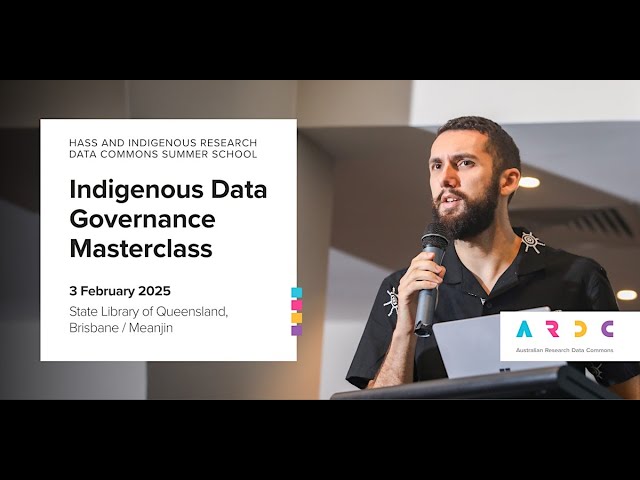
ARDC Indigenous Data Governance Masterclass at Summer School 2025
The ARDC Indigenous Data Governance Masterclass at Summer School at the State Library of Queensland equipped participants with the knowledge and tools to ethically manage Indigenous data, respecting the cultural protocols and sovereignty of Indigenous communities. It helped to build the capacity of researchers to engage with Indigenous data, fostering a culturally sensitive and informed approach to data-driven projects. Presenters: Robert McLellan (Gooreng Gooreng), University of Queensland, Levi Murray (Wakka Wakka and Kubi Kubi), University of Melbourne. Panel: Michael Aird (Director, Anthropology Museum, University of Queensland), Alana Harris (Australian Institute of Aboriginal and Torres Strait Islander Studies (AIATSIS)), Levi Murray (University of Melbourne), Jenny Fewster (Australian Research Data Commons (ARDC)).
RECORDING
Language Data Commons of Australia (LDaCA) Project Plan - September 2021
Prof. Michael Haugh from the University of Queensland, presents the project plan for the Language Data Commons of Australia (LDaCA), part of the ARDC-led Humanities, Arts and Social Sciences (HASS) Research Data Commons and Indigenous Research Capability Program. This platform will capitalise on existing infrastructure, rescue vulnerable and dispersed collections, and link with improved analysis environments for new research outcomes.
RECORDING
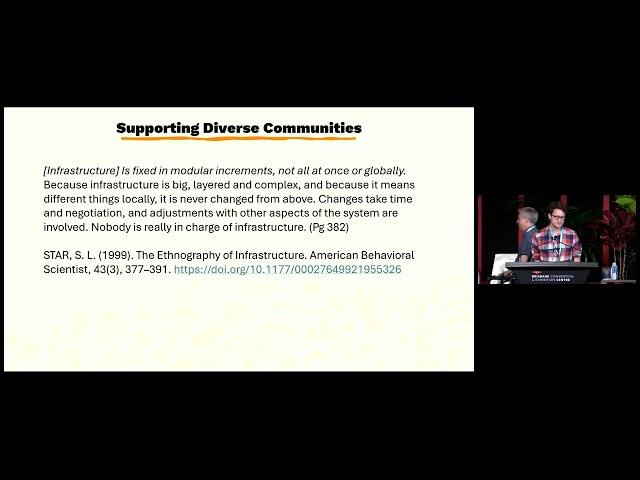
Session 1: The Language Data Commons of Australia: Supporting research for diverse communities
The Language Data Commons of Australia: Supporting research for diverse communities. Presenter: Michael Haugh, Sam Hames - University of Queensland.
RECORDING
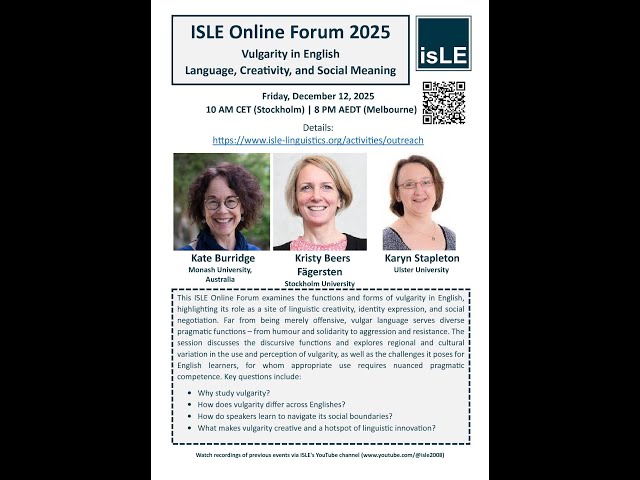
Burridge, Beers Fägersten & Stapleton - Vulgarity in English: Language, Creativity & Social Meaning
ISLE Forum featuring Kate Burridge, Kristy Beers Fägersten & Karyn Stapleton on 'Vulgarity in English: Language, Creativity, and Social Meaning'; Recorded on 12 December 2025; Moderated by ISLE Vice President (Profession) Martin Schweinberger.
RECORDING
The Language Data Commons of Australia – CLARIN 2025
Michael Haugh, Simon Musgrave and Robert McLellan. The Language Data Commons of Australia: Towards a Nationally Distributed Research Infrastructure.

RECORDING
Channel 10 News - Mind Your Language
Research by Chief Investigator Martin Schweinberger and colleague Kate Burridge (Monash University) on vulgar language in online spaces has received national and international media coverage. Martin’s and Kate’s research uncovered who swears the most online by country – with surprising results!
RECORDING
Digital Preservation Masterclass PARADISEC
LDaCA Chief Investigator Nick Thieberger presents a digital preservation masterclass exploring how PARADISEC is improving the long-term preservation, accessibility and sustainability of language and cultural collections through digitisation, RO-Crate and community-focused access.
RECORDING
Digital Technology for Language Growth with Ben Foley
This session focuses on: Uses of digital technology in language growth and the challenges that come with it; Longevity of technology – software, apps, computers, devices; ICIP and copyright issues – ownership of material.
RECORDING
Indigenous Data Provenance, Local Contexts and the Care Principles for Indigenous Data Governance 1
The provenance of Indigenous data is a key issue in the biodiversity data community particularly in the context of data governance and the establishment of a Multilateral Mechanism for sharing the benefits of DSI. Implementation activities for the CARE Principles for Indigenous Data Governance are under development providing guidance for researchers, repositories and publishers including appropriate attribution for both biocultural resources and associated traditional knowledge. In this session, the Local Contexts team and users of Local Contexts across GBIF, ODIS and TDWG will discuss and show examples of their inplementation of Local Contexts and how this tool supports the operationalization of the CARE Principles of Indigenous Data Governance.