


License, share & govern data
Guidance for licensing, sharing and governing data in alignment with FAIR and CARE principles.
On this page
Caring for and sharing collections ethically
Language data is always connected to people. We have a responsibility to govern and share language collections in ways that respect the rights of the people represented in the data. Data licensing is a way of describing who can access the data and how it can be used, allowing you to share it responsibly. Find guides and examples for creating a data license, support for sharing data with appropriate access controls and insights for applying Indigenous Data Governance over the life of your collection.
On this page
FEATURED RESOURCE
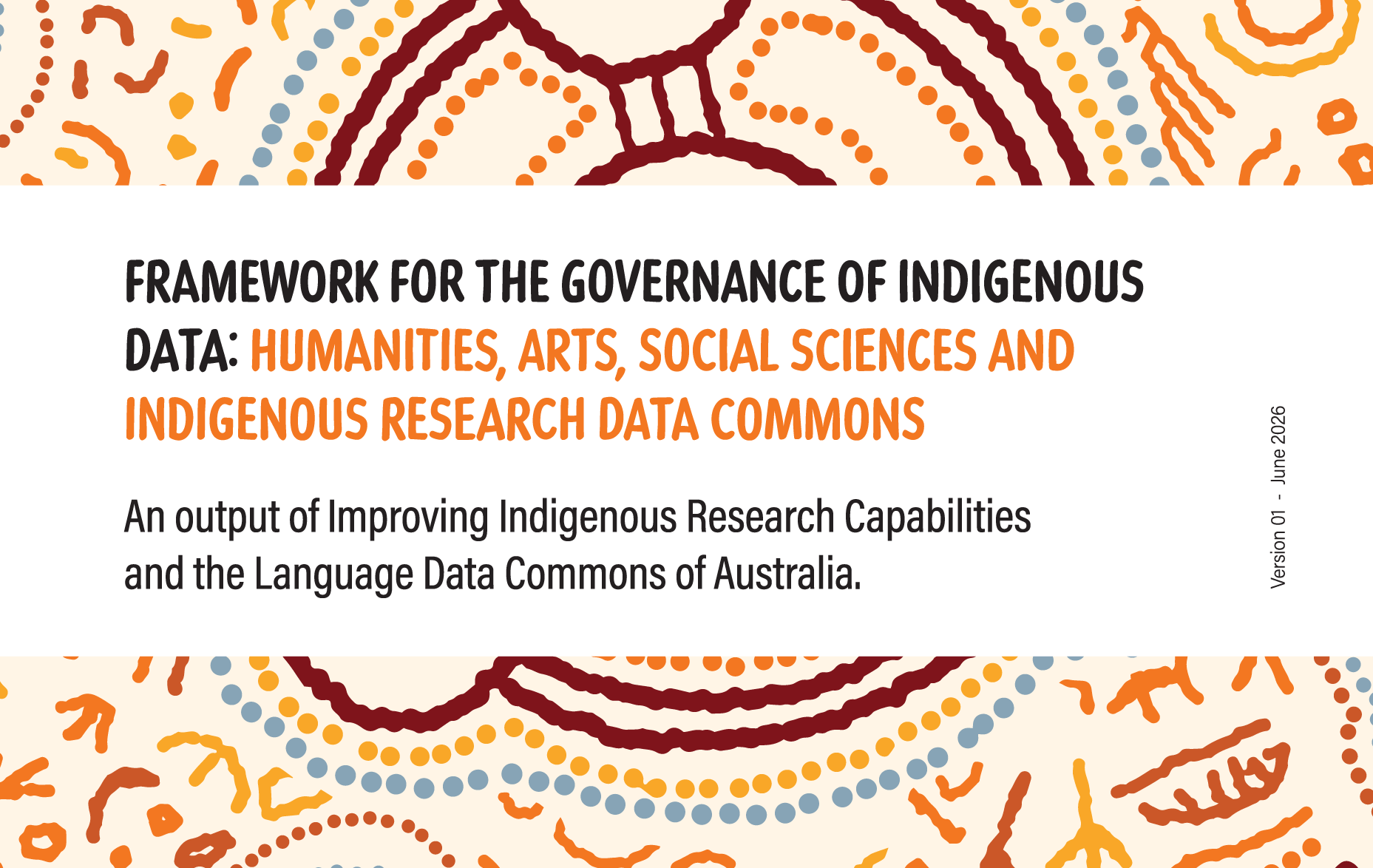
Framework for the Governance of Indigenous Data: HASS and Indigenous Research Data Commons
The Framework for the Governance of Indigenous Data provides a practical, culturally grounded approach to embedding Indigenous data governance across the HASS and Indigenous Research Data Commons. Developed through consultation and co-design, it supports Indigenous self-determination by providing principles, guidelines and accountability mechanisms for the ethical governance of Indigenous data throughout its lifecycle.
Framework for the Governance of Indigenous Data: HASS and Indigenous Research Data Commons
The Framework for the Governance of Indigenous Data provides a practical, culturally grounded approach to embedding Indigenous data governance across the HASS and Indigenous Research Data Commons. Developed through consultation and co-design, it supports Indigenous self-determination by providing principles, guidelines and accountability mechanisms for the ethical governance of Indigenous data throughout its lifecycle.
LDACA COLLECTION LICENSES
Explore existing licenses
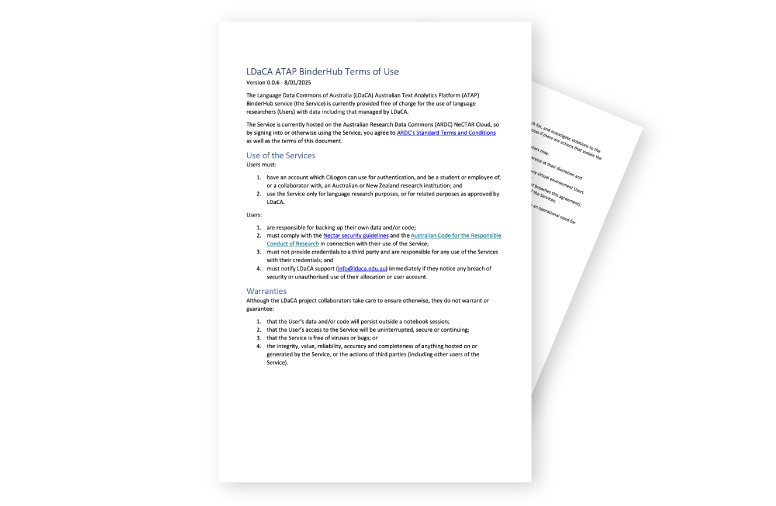
Collections in the LDaCA Data Portal may use established licences, such as Creative Commons, or custom licences developed by data contributors to reflect the specific requirements of their collection. Explore the custom licences currently applied to LDaCA Data Portal collections, including what collection content they cover and how they shape access and use. Reviewing these examples may also help you consider appropriate licensing approaches for your own collections.
Explore existing licenses
Collections in the LDaCA Data Portal may use established licences, such as Creative Commons, or custom licences developed by data contributors to reflect the specific requirements of their collection. Explore the custom licences currently applied to LDaCA Data Portal collections, including what collection content they cover and how they shape access and use. Reviewing these examples may also help you consider appropriate licensing approaches for your own collections.
ON THE BLOG
Implementing PILARS
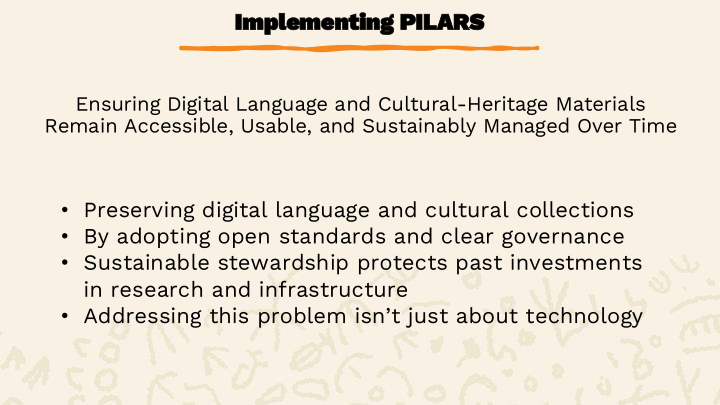
Discover how we have been working towards implementing PILARS — the Protocols for Implementing Long-Term Archival Repository Services — by adopting open standards, building clear governance mechanisms and designing infrastructure that communities can trust and control.

Copyrighted data: Options and considerations for working with newspapers and other texts
While corpus linguists might agree that data sharing is preferable, the use of copyrighted data imposes serious limitations. What options do linguists have for sharing these corpora outside their research team? Chief Investigator Monika Bednarek (University of Sydney) discusses this question.
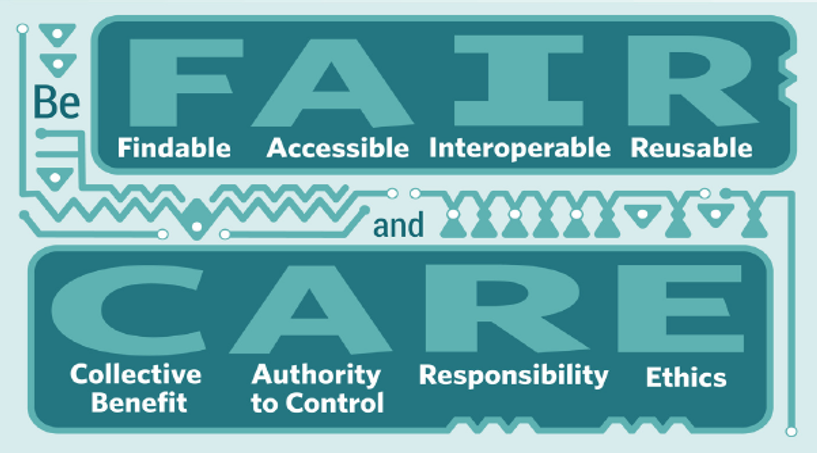
What are the FAIR and CARE principles and why should corpus linguists know about them?
The FAIR — Findable, Accessible, Interoperable, Reuseable — and CARE — Collective benefit, Authority to control, Responsibility, Ethics — principles offer a best-practice approach to handling data. In this post, Simon Musgrave discusses how corpus linguists can work with these principles.
ADDITIONAL RESOURCES

Interested in contributing to LDaCA?
Do you have data, expertise or resources you'd like to share? We'd love to hear from you.
Interested in contributing to LDaCA?
Do you have data, expertise or resources you'd like to share? We'd love to hear from you.