
Organise & describe data
Practical help for making your collections clearer, more accessible and responsibly managed.
On this page
Building clearer, more useable collections
The way you organise and describe your data plays a key role in making your collection useable and meaningful. LDaCA seeks to support researchers and communities to build collections that remain useful, accessible and responsibly managed into the future. Explore practical guides, tools and insights to support clear, effective data management that follows FAIR and CARE principles.
On this page
TOOLS
Flexible tools to assist with creating linked-data description and packaging.

Metadata editor: Crate-O
A browser-based tool for creating and editing RO-Crates. Use Crate-O to describe data and collections with structured metadata, add or update files and entities and build an RO-Crate through a guided interface.

RO-Crate Playground
Already have an RO-Crate? RO-Crate Playground is a browser-based tool for exploring, testing and validating RO-Crates. Use the Playground to inspect RO-Crate metadata, check how entities and properties are structured and identify issues with an existing RO-Crate.
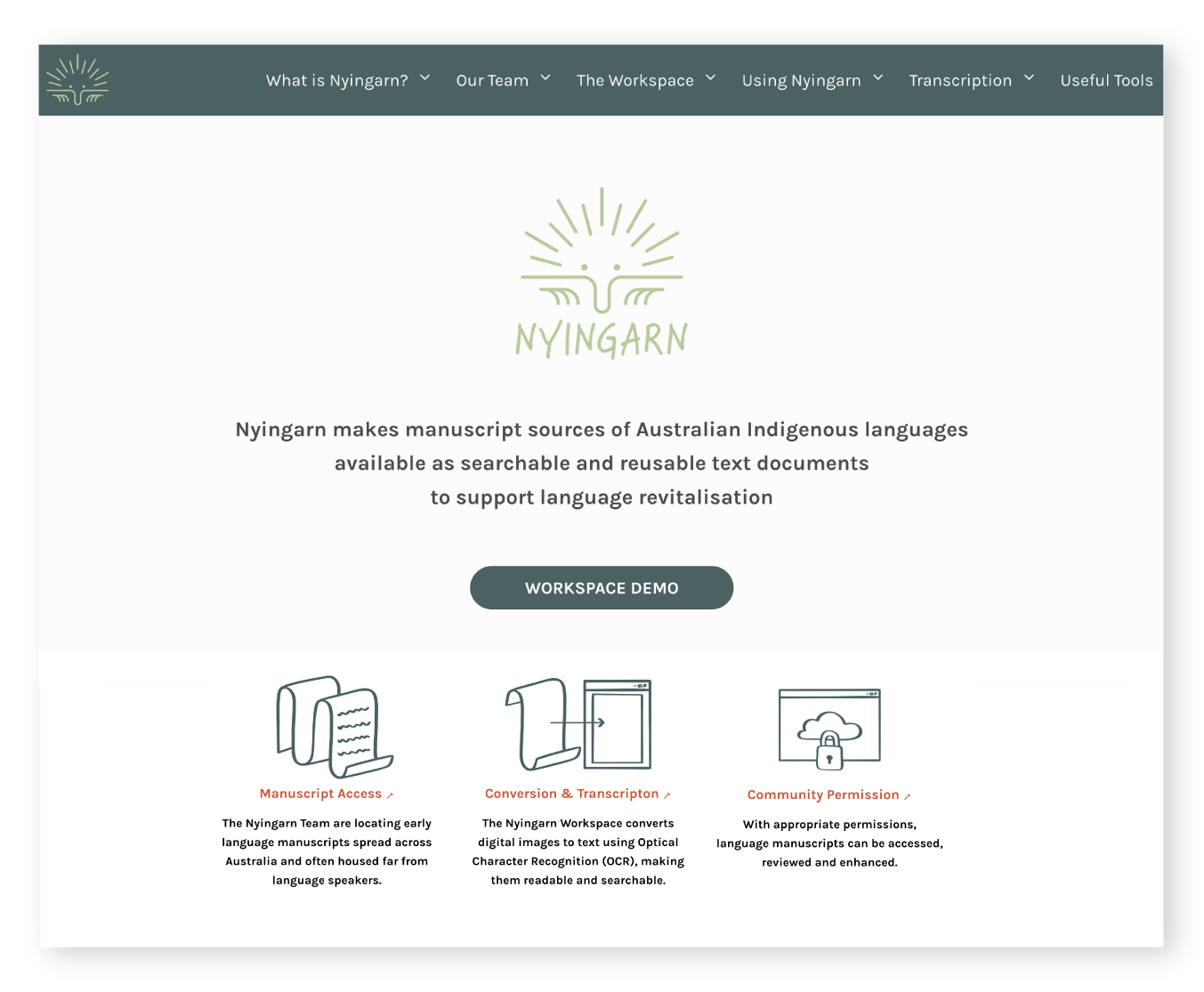
Nyingarn
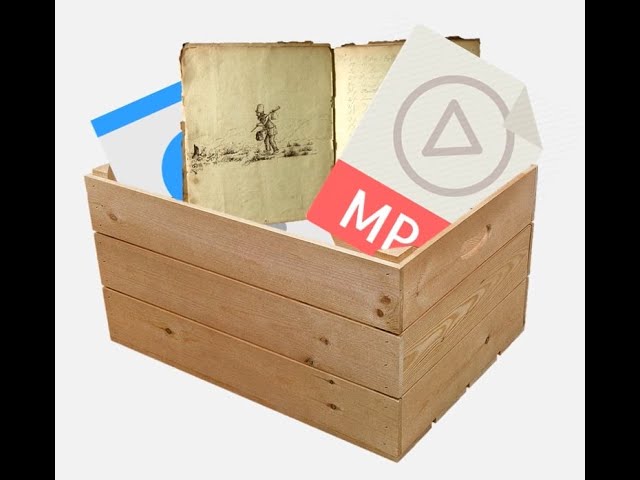
Nyingarn is a digital workspace for organising, describing and working with manuscript sources of Australian Indigenous languages. Users can add structured metadata to manuscript items, enhance transcriptions with information about people, places and languages, and prepare materials for appropriate access and reuse. Nyingarn combines transcription and metadata tools to help transform manuscript images into well-described, searchable and reusable digital language resources.
GUIDES
LDaCA provides hands-on support to make language data usable, ethical and future-ready.

RESOURCE
Metadata
Not sure what metadata means or why it matters when working with language data? This guide breaks down the key concepts and explains how metadata helps make language materials easier to describe, find and use.

LDACA TECHNOLOGIES GUIDE
Crate-O User Guide
A practical guide to using Crate-O, covering key RO-Crate and metadata concepts, navigating the interface, creating RO-Crates and adding metadata in bulk using spreadsheets.
ON THE BLOG

Five benefits of RO-Crate data packaging for language collections
Find out five ways Research Object Crates (RO-Crates) can support data stewards and why LDaCA uses RO-Crates in our infrastructure.
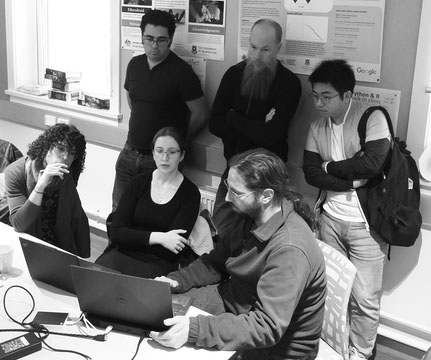
Team member tip: Mastering metadata
Data Migration Developer Mark Raadgever draws on his extensive experience with data migration to outline some important metadata principles. Consistency is key!
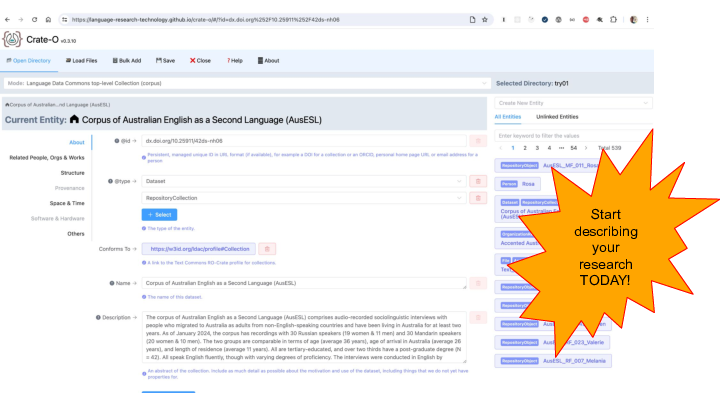
Crate-O — a drop-in linked data metadata editor for RO-Crate (and other) linked data in repositories and beyond
PT (Peter) Sefton attended the 19th International Conference on Open Repositories (3–6 June 2024, Göteborg, Sweden). With various collaborators, PT gave three presentations which are now available as blog posts: this post discusses Crate-O.
ADDITIONAL RESOURCES
Interested in contributing to LDaCA?
Do you have data, expertise or resources you'd like to share? We'd love to hear from you.
Interested in contributing to LDaCA?
Do you have data, expertise or resources you'd like to share? We'd love to hear from you.